
Copywriting
Designer
Developer

Copywriting
Designer
Developer
Your website should support where your fitness business is going, not just what you offer today. We build scalable websites for gyms, fitness studios, personal trainers, and boxing clubs that can grow alongside new programs, coaches, locations, memberships, and marketing campaigns without requiring a complete rebuild.
• Add new classes, programs, coaches and locations as you grow • Support long-term fitness SEO and content growth • Manage programs, trainers, schedules and articles through a scalable CMS • Keep performance fast as traffic and content increase • Support memberships, ecommerce and online registration • Connect booking software, CRM, payments, email marketing and automation
We build custom fitness websites around your programs, memberships, schedules, coaches, and conversion goals. Clear paths to trials, consultations, bookings, registrations, and memberships help turn search and social traffic into real prospects.
If your current website is outdated, slow, difficult to update, or not generating leads, we rebuild it with a cleaner structure, stronger messaging, better speed, and a more professional user experience.
We create scalable CMS structures for programs, classes, schedules, coaches, locations, memberships, resources and other repeatable content so fitness teams can handle routine updates without rebuilding page layouts.
We connect fitness websites with membership systems, class booking, personal-training appointments, online registration, waivers, deposits, recurring payments, and ecommerce so prospects can move from interest to action without unnecessary steps.
We connect your website with the systems your business already uses, including CRMs, booking tools, contact forms, analytics, automations, payment platforms, and lead-tracking workflows.
After launch, we provide ongoing website development support for updates, new pages, bug fixes, performance improvements, integrations, tracking, and long-term website growth.
For fitness businesses, mobile-first website design is essential. Potential members often discover gyms through Google, Instagram, ads, or referrals on their phones. We build responsive fitness websites that make it easy to explore programs, view trainers, compare memberships, find schedules, and book a first session from any device.
A gym website should do more than explain what you offer. We structure fitness websites around the information potential members need before taking action, including programs, pricing, coaches, results, schedules, testimonials, and clear calls to action that lead directly to consultations, trials, registrations, or memberships.
Fitness websites should be built to rank for the services people are actively searching for. We create search-friendly structures around terms such as gym memberships, personal training, boxing classes, group fitness, strength training, youth programs, and other services, giving each important offering its own opportunity to appear in Google.
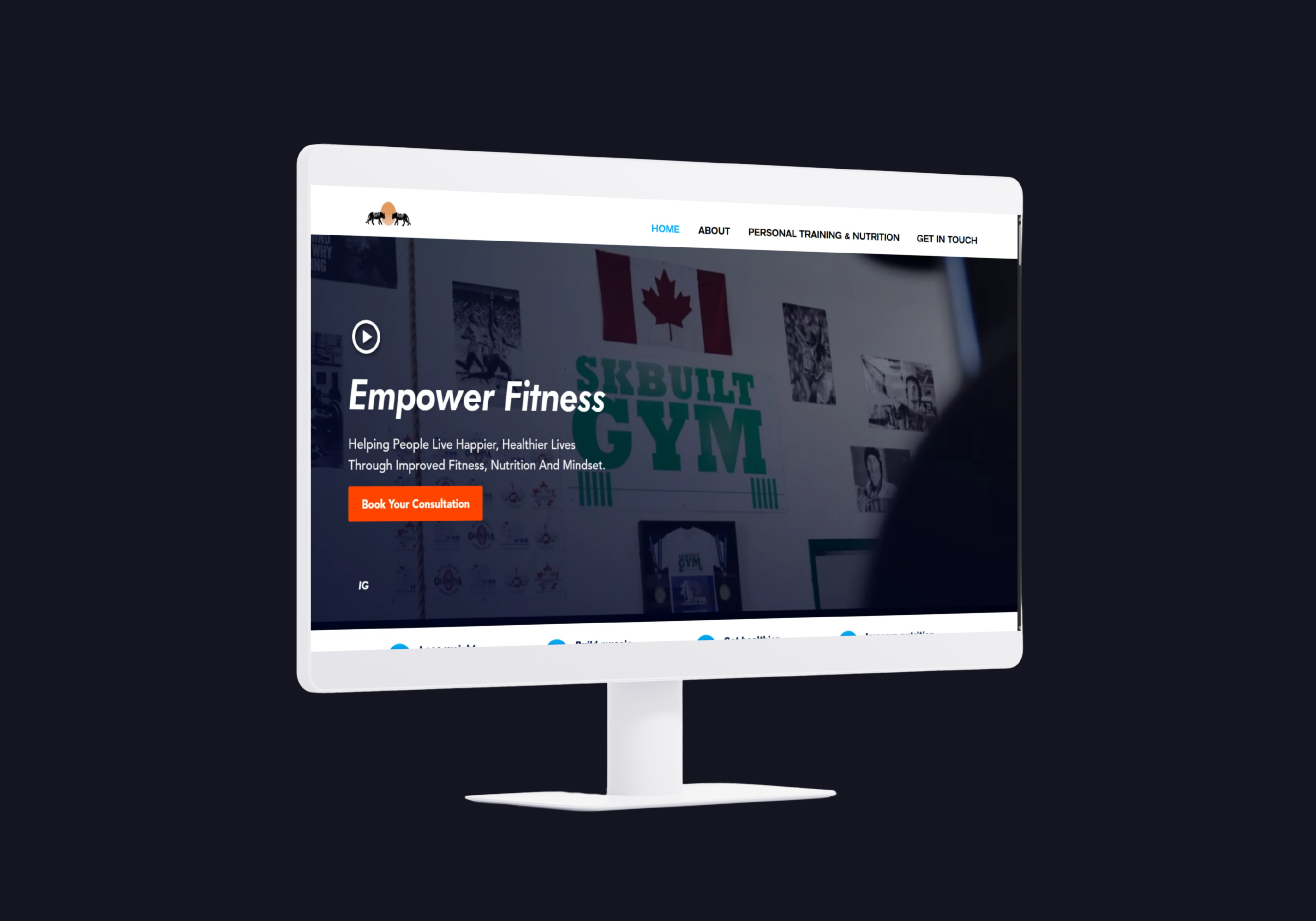
MBF Boxing Club is a Regina boxing and fitness club offering personal training, group classes, open gym access, competitive boxing, youth programs, corporate training and community-based boxing programs. Nomad Designs built a digital platform that could turn MBF's existing social-media demand into Google visibility, inquiries and online bookings while giving the growing club room to expand its services.
View Case StudyMBF Boxing Club
Regina, Saskatchewan
Before the website, much of MBF's demand was coming through Instagram, word of mouth and direct messages. The goal was to turn that attention into a proper digital system where potential clients could discover the business, understand its services and take the next step without relying on back-and-forth messaging.
We created a mobile-first website built around local search visibility, service discovery and conversion. Boxing training, personal training, group sessions and other programs were organized into clearer paths, with calls to action directing visitors toward booking and registration.
As MBF grew, the website expanded with it. The business now operates as a full boxing club with multiple coaches, open gym access, competitive athletes, youth development, First Nations programming, corporate training and additional membership and training options.
The published case study reports a 168% increase in organic views, a 12× increase in monthly inquiries and top Google visibility for relevant boxing searches following the project.

A strong fitness website needs to support more than brand awareness. It should help prospective members understand your programs, evaluate your coaches, find the right membership or class, and take action without friction. These are some of the principles we use when designing websites for gyms, fitness studios, personal trainers, boxing clubs, and other fitness businesses.
Fitness businesses often offer multiple services at once: memberships, personal training, group classes, youth programs, boxing, strength training, open gym access, specialty programs, and more.
A well-structured fitness website should make those options easy to navigate instead of forcing visitors to piece them together from one long page. We organize services into clear program categories with dedicated pages where appropriate, helping both users and search engines understand what the business offers.
This also creates stronger entry points for people searching for a specific service rather than simply searching for a general gym.
One of the biggest points of friction on gym websites is making basic information difficult to find.
Potential members commonly want to know what a program costs, when classes run, who it is for, and what they need to do to get started. Fitness website design should surface that information clearly while still giving the business flexibility to use consultations, free trials, or lead forms where pricing is not fixed.
Membership tables, class schedules, program details, FAQs, and clear booking options can substantially reduce the amount of information a prospect needs to request manually.
For many fitness businesses, the people delivering the service are a major part of the buying decision.
Dedicated trainer and coach profiles allow a gym website to showcase qualifications, specialties, experience, coaching style, competitive background, and the types of clients each trainer works with.
This is especially valuable for personal training websites, boxing gyms, performance facilities, and specialized fitness studios where clients may be choosing a specific coach rather than simply choosing a facility.
Well-developed profile pages can also create additional internal links and relevant content around the services each coach provides.
Fitness is a trust-driven industry. Prospective clients want evidence that the business delivers results and provides an environment they will feel comfortable joining.
A high-performing fitness website can incorporate Google reviews, client testimonials, transformation stories, member photography, competition results, case studies, certifications, awards, and community involvement where relevant.
For gyms and fitness studios, this proof is often more persuasive when it is placed beside the program or service it supports rather than isolated on a generic testimonials page.
The website should not become a separate layer clients have to navigate before reaching the systems the gym actually uses.
We structure gym websites to work with existing tools for class booking, memberships, personal training appointments, waivers, payments, email marketing, CRM systems, and lead follow-up.
The goal is to create a consistent path from discovery to registration, even when platforms such as Mindbody, Trainerize, Square, Calendly, Stripe, or other fitness software handle parts of the transaction behind the scenes.
A gym that offers ten different programs should not rely on one generic services page to rank for all of them.
Dedicated landing pages give each important service its own space to target relevant searches and answer the questions prospective clients have about that specific offering. Depending on the business, this could include pages for personal training, boxing classes, group fitness, strength training, youth programs, women’s classes, corporate fitness, sports performance, or open gym memberships.
This creates a stronger SEO structure while also sending users directly to content that matches what they were searching for.
For most gyms and fitness studios, the most commercially valuable searches are local.
A fitness website should clearly communicate the business location, service area, hours, contact information, programs, and other signals that help search engines understand where the business operates.
For businesses with multiple locations or service areas, dedicated location pages can support searches such as gym in Regina, personal trainer in Regina, boxing classes in Regina, or equivalent searches in each market without forcing every keyword onto the homepage.






.png)